
Announcements
Today, the live streaming It’s an important digital stage. In Brazil, lives connect audiences and creators in real time. That makes the live broadcast the best way to engage people.
Announcements
The biggest advantage of this medium is the interaction that happens in real time. With comments, questions and shares, viewers saw active participants. This interaction creates a real connection and helps build loyalty, which is crucial to online success.
To do a successful live show, you have to plan it well. In this guide, you will find important tips. We’ll talk about choosing the right platform, and how to prepare well for audio, video and lighting. Besides, having a good script is essential to maintaining the audience’s interest.
Integrating live with recorded content is also a smart strategy. Saving the recordings and using parts of them on platforms like Instagram, YouTube and Facebook, you power your marketing efforts. It also helps keep your content relevant for longer.
Why live streaming is an essential digital stage
Lives have changed the way brands and creators interact with their audience. They bring viewers and broadcasters closer together, creating a true connection. This format also builds trust and helps people make faster purchasing decisions.
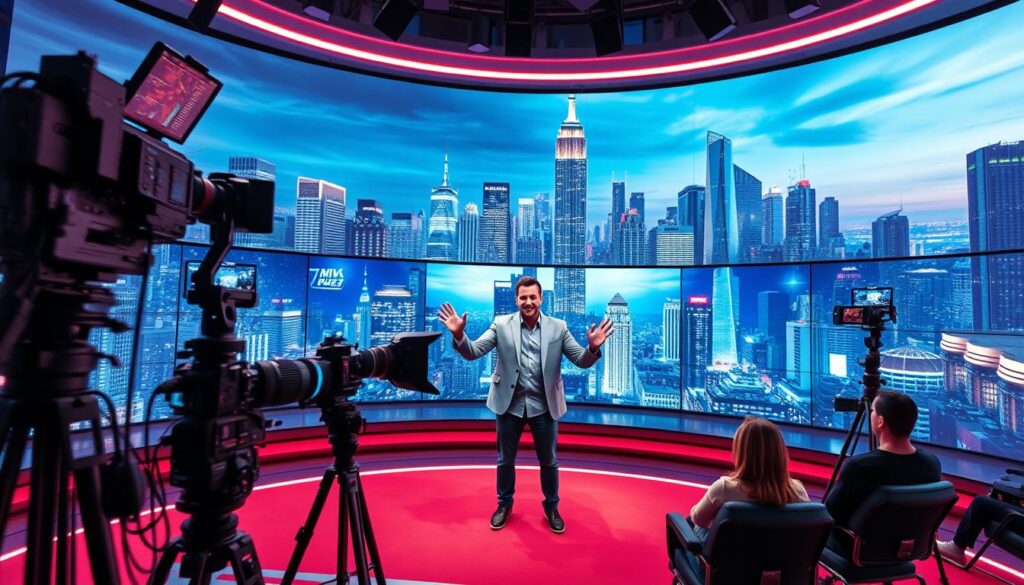
By using live broadcasts, several practical advantages emerge. The connection with the audience happens quickly, questions can be clarified on the spot. Besides, everything is more transparent.
- Quick interaction with customers.
- Authenticity increases engagement.
- Chance to go viral.
Lives are versatile and can be used in a variety of ways. In entertainment, you get to see unique shows and content. In commerce, they help sell more with demonstrations. At events, they make the coverage more dynamic. And companies report news directly.
They’re powerful inbound marketing tools. They help attract, educate and convert an audience. Telling stories through video builds brand trust.
In today’s marketing, you need to know the outcome of your actions. Videos and lives are important investments to achieve goals. Creativity, along with technology and planning, makes any action more effective.
To increase reach, it’s good to combine lives with social networks, email marketing and website. This strengthens the online presence and opens up more opportunities to win over audiences.
Choosing the ideal platform for your live
Choosing the ideal live platform depends on a few important factors. Evaluate who will be watching, the format and available technical resources. Each platform has unique benefits that help with reach and live quality. Define what you’re looking for: whether to engage quickly or hold a longer event, and think about how to use the content later.
Instagram Live and let live
- It’s easy to access both personal and business accounts, starting with your phone.
- Invites profiles to participate and allows you to save parts of the live in Reels or Stories, increasing reach.
- The maximum duration is 60 minutes. To use it on the PC, you need software like THE.
YouTube Live and let live
- Perfect for long lives and events with many viewers, no limit to the duration.
- It works with THE for a richer production, including multiple cameras and advanced controls.
- Set everything up by YouTube The studio. Some appeals can take up to 24 hours to be approved.
This is Facebook Live
- As a pioneer, it has many features both on computer and mobile devices.
- It allows you to add participants, use filters and choose the camera on your desktop.
- It is popular among various age groups, being a good choice for several brands.
TikTok Live and let live
- It especially reaches young and creative audiences.
- The transmission is released gradually; some users need to meet specific requirements.
- Getting started on a mobile phone is easy; using it on your computer requires software like THE.
Deciding on the best platform for your live involves comparing various aspects. See who will be watching, how long it will last and what you need technically. Also, think about what you’ll do with the recording after live. Choose where it will be easiest to reuse the content.
Strategic planning and format of the transmission
A good one live planning It’s the key to success. Before you start, set clear goals, know what your key performance indicators are (Key performance indicators) and understand who your audience is. This will help you decide on the content, how long it should be and what tone to use.
Having defined goals helps in analyzing the results. You can focus on increasing engagement, sales, brand awareness or support. To measure, use metrics like number of simultaneous viewers, average viewing time and conversion rates.
Choosing the right format makes all the difference. Depending on your objective, choose one live format whether it’s to convert, reach more people or create a connection. We give and live commerce They’re great for sales. Interviews lead to new audiences. Showing backstage brings people closer to your brand. And sessions of Q&A They’re very engaging.
- Format for sales: demonstration and live offers.
- Outreach format: guests and collaborations with influencers.
- Connection format: behind the scenes and authentic content.
- Format for interaction: question and answer sessions.
A well-crafted script makes the broadcast organized and interesting. It starts with a quick opening that introduces the host, what the audience will win and a call to action (CTA). In the middle, break it down into blocks of content with interactions.
The ending should summarize the key points, reinforce the CTA and thank the audience. Practicing with rehearsals helps reduce nervousness and fine-tune details. Train the transitions, like sharing your screen and including videos.
- Planning live: defines objectives and KPIs.
- Meet the live audience with data from nets and A-tests/AND B.
- The Choice live format aligned with the objectives.
- Create one Transmission route with opening, developing and closing.
- Test it to ensure fluidity and quality.
By following these steps, your live becomes clearer and more purposeful. Plan carefully to really add value to your audience and get the best results.
Equipment and technical quality for professional lives
Choosing the right gear changes how your audience sees you. Invest in items that have a good value for money. This ensures a smooth and professional-looking transmission.
Cameras and webcams
Smartphones today offer great visuals for beginners. One webcams quality, such as Logitech Brio, brings more sharpness and stability.
For more elaborate productions, opt for DSLR or mirrorless cameras with capture card. This allows for greater focus and color control.
Sound
A clear sound keeps the audience interested. Lapel microphones ensure a clear voice during movements and interviews.
Headsets are good for podcasts and interactive lives. USB or XLR microphones with audio interfaces from Focusrite or Behringer greatly improve sound quality.
Lighting and setting
Good lighting should eliminate shadows and enhance the presenter. Ring lights And softboxes are good and cheap.
Build a stage that shows the essence of your brand. An organized and aligned environment shows your professionalism in videos.
Connection and redundancy
Test your live connection before starting. Look for an internet connection with good upload speed and low latency.
It’s important to have a plan B. A backup with 4G/5G, a second Internet or backup encoder prevents problems.
- Technical checklist: charged battery, tested cables and empty memory cards.
- Sound and image testing in advance to adjust gain, exposure and framing.
- Have extra adapters and cables for emergencies.
Software and technical configuration for transmission
Choosing the right software and adjusting basic settings is critical to quality broadcasting. Prior testing is important to avoid technical problems. See recommendations for preparing your live broadcast.
Tools and integration
- OBS Studio is free and ideal for combining cameras, audio and screen. It supports multiple scenes and transitions, as well as integrating with capture devices.
- Streamlabs, vMix and LoolaTV are other options with additional features. They include live chat and options for making money.
- Before you begin, check the access keys and authorizations for platforms like YouTube, TikTok and Facebook.
Bitrate, resolution and frame rate setting
- To define the optimal bitrate, consider your upload speed. For 720p broadcasts at 30fps, 3 to 6 Mbps is sufficient.
- For higher quality at 1080p and between 30 to 60fps, 6 to 12 Mbps is recommended. Adjustment based on your internet connection.
- The choice of resolution and frames per second shall take into account the platform and its equipment. Lowering these values can help with slower connections.
Plugins, motion graphics and overlays
- Plugins for OBS increase their functionality. That includes advanced automation and audio filters.
- Overlays and background images help to create a unique style for your broadcast. They make it easier to recognize your brand.
- Using motion graphics makes the broadcast more interesting. Opt for lightweight files so as not to overload the CPU.
Good practices before live
- Run recording tests to verify audio and video quality.
- Monitoring your computer’s performance helps you adjust settings to avoid crashes. Choose the right encoder for your video card.
- Prepare for contingencies with a plan B. It could be a second transmission method, mobile internet or even lower the bitrate.
Planning of visual assets
- Organize your visual elements in a practical way. This makes it easy to switch between them during transmission.
- Develop motion graphics that match your brand identity. This includes colour and style of content.
- Test all elements and plugins in real conditions. This avoids problems during the live broadcast.
Promotion and dissemination to attract an audience
To have a successful live show, mix interesting content with good promotion strategy. Before you start broadcasting, plan your dissemination. Create a catchy headline and description that highlights the benefits and motivates people to participate.
The title should be simple, straightforward and contain keywords such as “live broadcast” or “live commerce”. Use the description to give details: what topics, time, guests and how not to miss.
Early disclosure and cross-promotion
Announce the date and time in advance. Posts, Stories and Reels Instagram And Facebook events are helping to create expectation. Do not forget the reminders in YouTube and newsletters.
- Make short videos for Reels and TikTok.
- Get help from partners and influencers.
- Encourage subscribers to activate notifications and share.
Audience targeting and paid advertising
Choose your audience and target before spending on ads. You can use Facebook Ads and Google/YouTube Ads to target specific interests and behaviors. Keep track of the cost per view and adjust your budget if necessary.
Calls to pre-live action
Ask questions in advance, invite sign-ups and encourage sharing. This helps increase engagement and makes the platforms’ algorithms promote your live more.
Key metrics
Always look at the number of subscribers, how many have activated reminders and engagement with posts. This data helps to improve your future promotions and adjust advertisements more effectively.
Engagement during live and retention techniques
Starting with the audience in mind and ending with clear instructions is crucial. To keep the audience engaged, it’s essential to read comments, perform interactive activities and have CTAs (calls to action) well positioned. A well-structured plan, coupled with discipline, helps to keep the audience interested and turns them into active participants.
Interaction in real time
- Reading and answering questions brings the audience closer together. Spending five to 10 minutes on live interaction is good, without disrupting the flow of live.
- Having moderators helps filter the chat and highlight important questions. That keeps the rhythm and helps keep the audience connected.
- Regularly repeat important information. It helps people who connect in the middle of a live broadcast to situate themselves.
Dynamics and CTAs
- Polls and challenges keep viewers engaged longer. Use sweepstakes and offers to encourage viewing.
- Enter CTAs at important moments of the broadcast, such as to subscribe or buy. Clear instructions encourage immediate action.
- Switch between content and calls to action. That keeps the audience interested and ready to act.
Time and rhythm management
- Organize the live in 10- to 15-minute chunks, each with its own purpose. That makes it easier for the audience to follow and stay interested.
- Respect the time limits of the platform, as in Instagram. Plan breaks and smooth transitions between segments.
- A production team reduces technical problems and allows the presenter to interact more naturally live.
Post-transmission analysis and reuse of content
After the live is over, it’s important to analyze the data carefully. It helps to turn effort into learning. And it guides decisions about the format, script and how to promote future broadcasts.
- Peak viewership and simultaneous viewing to assess immediate reach.
- Average viewing time and retention rate to understand actual engagement.
- New followers and conversions generated as KPIs impact indicators.
To analyze the live, use reports from YouTube, InstagramIt’s not like I don’t know what to do.
Save recordings and create derivative content
It’s crucial to save the live footage. Making it available for later viewing increases the usefulness of your broadcast.
- Edit short clips for Reels, Shorts and carousel posts.
- Turn snippets into podcast episodes, articles or newsletters.
- Put together an institutional video featuring the best moments for future presentations.
As you enjoy live streaming again, focus on headlines and thumbnails that grab attention across each platform. And adjust the story to your audience.
Testing and continuous refinement
Use A-tests/B during the live to see what he likes best, changing one element at a time. This helps to better understand about titles, images, timings and formats.
- Compare click-through, retention and engagement rates between the different versions.
- Write down what you have learned and use it in future broadcasts.
It’s good to combine numerical data with user opinions. Continuing to test, measure and adjust helps keep your strategy relevant. And it makes future lives even better.
Conclusion
The success of lives in Brazil comes from careful planning, technique and promotion. It’s crucial to choose the right platform and prepare everything and everyone. Having a clear road map also helps greatly.
Applying good practices makes the live more professional. That broadens the scope. During live, interacting and controlling the rhythm keeps everyone interested.
Analysing the data afterwards is essential. Saving recordings and sharing clips on social media helps you get the most out of it. Tests A/B and adjustments continuously improve everything.
By combining video production and promotional strategies, a live performance can become unforgettable. Consistency and focus on the right practices point to success. They also increase the return on investment.
FAQ
What is a live broadcast and why is it important for my brand?
Live streaming connects brands to audiences directly through social media. Offers real time interaction, authenticity and transparency. It helps increase your reach, build audience loyalty and produce content for other campaigns.
How to choose the right platform Instagram, YouTube, Facebook and TikTok?
Your choice should consider the audience, duration and technical resources. Instagram It’s good for integration with Reels/Stories; YouTube, for more complex productions; Facebook, for a varied audience; and TikTok, for young people. Think about the ease of streaming and repurposing content.
What goals should I set before planning a live performance?
Set clear goals, such as improving engagement, generating leads, increasing sales or brand awareness. Use measurable KPIs to measure success and improve future lives.
What format should I choose for my live broadcast?
Choose based on your audience and target. Use demos to sell, interviews to engage, backstages to humanize your brand and Q&A for interaction. Mix formats to make your live show dynamic.
How should I structure the script of a live performance?
Start with a quick introduction and call to action. Develop the theme in blocks, alternating with interactions. Finish by recapitulating and thanking. It helps to engage those who arrive at different times.
What’s the minimum equipment for a good quality live?
A modern smartphone may suffice. To improve, consider webcams or DSLRs/mirrorless. Microphones and good lighting are also important. This helps to professionalize your broadcast.
How can you make sure that your audio is clear and noiseless?
Choose the right microphone and test it beforehand. Eliminate environmental noise and use sound filters if necessary. Good audio keeps the audience interested.
What is the recommended internet speed and how to implement redundancy?
Adjust the video quality to your Internet. Use backups, like mobile data or another connection to prevent failures.
What software can I use for more professional broadcasts?
OBS Studio is free and a good place to start. Streamlabs, vMix and LoolaTV offer additional features. Choose based on your needs.
How should I set bitrate, resolution and frame rate?
Choose settings that balance quality and stability. Follow the platform’s recommendations and test before going live.
What visual and graphical assets should I prepare before going live?
Prepare elements such as overlays, logos and animations. It makes the live show more professional and helps with visual communication.
How do you promote live to attract audiences and ensure viewership?
It uses social media, events on Facebook YouTube and emails to disseminate. Relevant keywords and partnerships increase reach. Paid ads can also help.
What engagement techniques should I use during the broadcast?
Interact with comments, take surveys and offer exclusive deals. Clear CTAs and a moderator can greatly improve engagement.
How do you manage time and rhythm live?
Plan the duration and divide it into thematic blocks. Stick to the schedule and practice improving your rhythm.
Do I need a team, or can I do lives by myself?
You can do it alone, but having a team improves the quality and focus of content. That’s crucial to more complex lives.
What metrics should I track after the broadcast?
Look at the number of views, average viewing time and conversions. Compare your goals to adjust future strategies.
What about the live recording after the event?
Reuse the recording in different content formats. This extends its reach and improves return on investment.
How to test formats and improve performance over time?
Perform A-tests/B and analyse the results. Adjustment based on feedback and data to continuously improve their lives.
What technical precautions should I check before starting the transmission?
Check equipment, synchronization and connection. Do trials to prevent problems and ensure a stable live.
How do you integrate lives into your multichannel and inbound marketing strategy?
Use lives to attract and engage. Integrate with other marketing efforts and repurpose content to continue the conversation.
Content created with the assistance of artificial intelligence