
Adverts
What eye color do you prefer?




Dating apps have changed how we connect with the world. Research from happn indicates that 451% of singles have already made friends through these apps. And 481% of singles are open to making new friends, not just seeking romance.
During the pandemic, the use of platforms like Tinder increased significantly. This growth helped many people feel less isolated, according to BBC reports and research from the Pew Research Center.
Currently, dating apps offer many advantages. They have algorithms that help find compatible people. There are also special modes for friendship, such as Bumble BFF, and apps for specific interests, such as Grindr and Feeld.
Overview: Evolution of dating apps
Dating apps around the world have changed very quickly. They started with websites and emails, and soon came mobile apps. These changes reflect our customs, technological advances, and how we want to connect today.
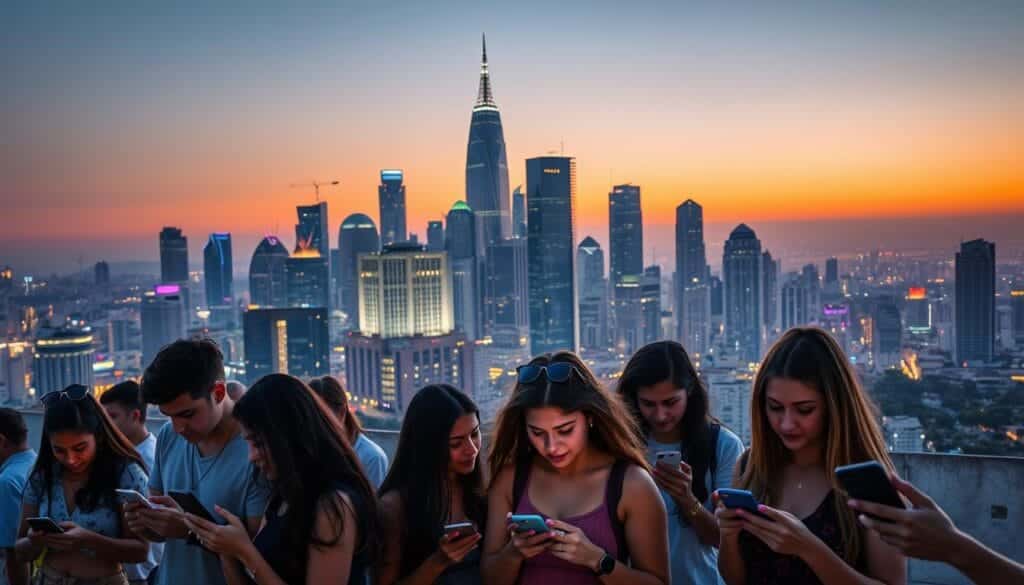
The history of dating apps has had some important moments. Old websites gave way to Tinder in 2012, changing everything. With swipes and a focus on mobile devices, Tinder became a global phenomenon and inspired many innovations.
H3: History and recent adoption
- Beginning: email lists and websites with static profiles.
- Mobile revolution: Tinder brought instant interaction and geolocation.
- Diversification: Bumble, Hinge, OkCupid, and Happn have arrived with new offerings.
- Adaptation: now, we use it for making friends, networking, and safe meetings.
H3: Impact of the pandemic on popularity and usage
The pandemic caused app usage to skyrocket. In March 2020, swipes hit record highs. Some services registered billions.
This growth brought both good and bad things. Connections increased, but so did problems. Harassment and pressure grew. Companies had to improve security because of this.
H3: How apps have expanded their functions beyond romance
- Specific modes: Bumble BFF and Bumble Bizz for making friends and professional contacts.
- Compatibility features: OkCupid and Hinge use questionnaires and algorithms.
- Geolocation: Happn shows you who you've crossed paths with along the way.
Dating apps around the world have evolved a lot. They're not just for romance anymore. Now, they help you make friends, work contacts, and other social connections.
advantages of dating apps
Dating apps have revolutionized the way people meet in the world. They make it easier to start conversations and discover what both people like. This is great for those looking for love, friendships, or just someone to hang out with.
Ease of access and convenience
With Tinder and Bumble, you can chat anytime. You no longer need to wait for parties or dates to meet someone. This helps you fit socializing into your busy schedule.
Paid features, like Tinder Plus, let you meet people from other places. This way, you're not limited to your city or neighborhood.
Greater diversity of profiles and connection options.
On dating apps, you can find people of various ages and interests. This increases your chances of finding someone truly compatible, not just someone who seems nice.
Studies indicate that many people use these services to make new friends. Approximately 411% of people are looking for friends, and 481% are open to connections beyond romance.
Features that increase compatibility (algorithms and filters)
Algorithms and filters make it easier to find someone who matches you. They consider location, age, and hobbies to suggest better options.
Security mechanisms and strict rules ensure a better experience. Using these tools helps you take advantage of the benefits of dating apps, reducing problems and improving matches.
Ease of making friends and non-romantic connections.
Around the world, dating apps are more than just for romance. People are looking for casual connections, interest groups, and local social networks. This increases the chances of finding companionship without the pressure of a relationship.
Motivations for seeking friendship: affinity, humor, and lifestyle.
Being able to converse easily is what attracts people most, according to 48% of those surveyed. Lifestyle and humor come next, with 12% and 11%, respectively. Having common interests is important to 9% of people.
Common activities among friends who met on apps.
Dates are usually casual and close to home. Bars, cafes, and restaurants are chosen by 291% of people. About 191% prefer walks around the city, and 15% watch series together.
- Short trips and going to the movies are other popular activities.
- Some report experiences of "friends with benefits" relationships.
- 15% say that friendships on apps led to romance; among men over 36, this number rises to 21%.
These statistics reveal that dating apps worldwide are useful for expanding social circles and finding people for local activities. Platforms like happn are important for identifying trends and facilitating clear intentions. This makes connections more natural and realistic for those seeking new friendships.
Greater geographic reach and social diversity
Dating apps have changed how we meet new people. With features like Tinder's Passport, it's possible to search for someone outside your neighborhood. This allows us to talk to people from different places, broadening our horizons.
This connection between diverse cities and cultures enriches the exchanges between people. Happn, for example, uses geolocation to connect people who frequent the same places. In this way, we increase the diversity in our interactions, both within the city and in other regions.
Some apps cater to specific groups, from the LGBTQIAPN+ community to those seeking long-term relationships. Grindr, Feeld, and Femme are some examples. Platforms like OkCupid and Hinge focus on compatibility. This helps us find someone with similar interests, in a safe way.
- Apps for specific groups improve how we connect, based on shared values.
- They also reduce the time we waste on profiles that don't match us.
- And the variety of options available promotes greater inclusion and better represents diversity.
Local encounters can start with a simple conversation. According to studies, up to 151% of friendships made through apps turn into romances. And, for men over 36, that number rises to 211%. This shows that proximity can lead to romantic relationships.
The combination of geographic reach with specific interests creates a unique space. Here, it's possible to find people with diverse identities and tastes. In this way, we explore new connections without leaving home, bringing more diversity and new ways of relating to one another.
Security tools and profile verification
Dating apps improve user safety by investing in technology. Tinder and Bumble, for example, use selfie verification systems. Users' photos are compared to selfies taken at the time, which increases reliability. However, this does not solve all security problems.
Here, we'll explore how these security tools actually work, and what actions users can take to increase their own protection.
Selfie verification and identity check
Selfie verification requires the user to take a selfie on the spot. The facial recognition system compares this photo to the profile picture, checking if they are the same person. Match Group and other companies use this technique to reduce fake profiles and prevent catfishing.
Moderation features and artificial intelligence (abuse detection)
AI tools analyze images and texts looking for signs of abuse. Before the message reaches another user, the system checks for offensive content. Bumble, for example, blurs sensitive photos that can only be viewed with the recipient's permission.
- Automatic detection of offensive messages.
- Filter for images and videos that may be dangerous.
- Blocking or suspending accounts with repeated misconduct.
Good user practices to increase personal safety.
Personal safety measures are also crucial. Choose public places for first dates and let someone you trust know about your plans. Always go out with your phone fully charged and only share your location if necessary.
- Request selfie verification before sharing private information.
- Enable privacy features, such as disabling geolocation on Happn.
- Block and report any profile suspected of fraud or harassment.
Despite technological advancements, challenges remain in profile verification. The differences between paid and free services are one example. We need changes in rules and culture to make dating apps safer. This includes actions from both companies and legislators.
Features that improve the quality of interactions.
High-quality apps have changed the way we connect. Now, instead of just swiping, features promote more complete profiles. This greatly improves conversations within the apps.
Detailed profiles make all the difference in understanding genuine interests. Platforms like OkCupid and Hinge have questionnaires. They help users share their values, hobbies, and what they're looking for in love.
Detailed profiles and compatibility questionnaires
- Compatibility questionnaires suggest topics about what is essential and daily habits. This makes it easy to start more meaningful conversations.
- Clear answers reduce the chances of misunderstandings. Users say that well-filled profiles increase the possibilities of genuine encounters.
Viewing limitations and promoting quality.
- Viewing fewer profiles per day helps break the habit of quick scrolling. This encourages more thoughtful choices.
- Hinge, for example, limits how many profiles you can see. This ensures that connections have a better chance of having valuable conversations.
Tools for starting conversations: icebreakers and prompts
- Dating apps use icebreakers to help start conversations in a creative and safe way.
- Platforms like Coffee Meets Bagel offer suggestions for phrases and topics. This helps to reduce superficial conversations.
- Personal prompts help create a unique opening. This increases the chance of receiving a response and the conversation moving forward.
These features combined create genuine connections. Having complete profiles, using compatibility questionnaires and icebreakers in dating apps—all of this helps in natural conversations that lead to real dates.
Platforms that stand out in the market and their offerings.
The global market offers unique apps. Each one strikes a balance between reach, audience, and security. Your choice depends on what you're looking for: friends, a romantic partner, or something casual.
Tinder, Bumble and popular features
O Tinder He became famous for his unique way of swiping on the screen. It has features like Super Like and Boost to help you stand out. With subscriptions like Tinder Plus and Gold, you can find more people faster.
O Bumble It allows only women to initiate conversations in heterosexual connections. It has modes like Bumble BFF for friendships and Bumble Bizz for professional contacts. The platform also focuses on safety and organizes events for its users.
Hinge, OkCupid, and a focus on lasting relationships.
Hinge loves profiles that tell stories and limits how many you can see per day. It's perfect for those looking for a serious relationship. OkCupid matches people through questionnaires, helping you find someone with similar interests.
Happn, Feeld, Grindr, Coffee Meets Bagel and niche options
Happn uses your location to show who you've been near. You can switch out of visible mode and use charms to get their attention. Feeld is for those seeking polyamory or unconventional relationships, and values inclusivity.
- Grindr and similar apps are for the LGBTQIAPN+ community, with special features for this group.
- Coffee Meets Bagel suggests carefully selected people every day, with an emphasis on creating meaningful connections.
Choose from Tinder , Bumble , Hinge, OkCupid, Happn, Feeld, Grindr, Coffee Meets Bagel. Think carefully about your goals before deciding.
Psychological and social benefits of proper use
Using dating apps with specific goals offers several advantages. Beyond romance, people make genuine friends through happn and other platforms. This improves well-being and opens doors to new social encounters.
Increased self-esteem through building positive connections.
Exchanging respectful messages and finding compatible people is good for self-confidence. Having your profile seen and receiving positive messages increases users' self-esteem. A well-made profile and compliments strengthen the image we have of ourselves.
Reducing feelings of isolation and expanding social networks.
Features like Bumble BFF make it easy to make new friends. Searching for people with similar interests helps you feel less isolated. Friendship sites make it easier to meet new people, even in distant places.
Opportunity to explore identity and orientation in safer environments.
There are specific apps and privacy settings that protect the user. The spaces are secure and have teams that moderate the content. This way, people feel freer to explore. quem são and what they like.
- Practical follow-up: set realistic goals before using an app.
- Essential care: checking and critically interpreting signs helps prevent stress.
- Balance: Combining online meetings with in-person activities strengthens relationships.
How to choose the right app and take advantage of its benefits.
Choosing the right platform is important for friendship, serious relationships, or casual encounters. Before creating an account, think about what you want, who you want to meet, and the level of privacy you need. A well-thought-out choice reduces wasted time and fosters good connections.
Defining what you're looking for helps you choose better. Tinder and Badoo are good for those who want diversity and quick encounters. Hinge or OkCupid are good for a serious relationship. Bumble is great for women to take the initiative. Happn helps you find people nearby. Feeld and Grindr are for specific desires.
List your goals: friendship, serious dating, casual relationships, or professional networking.
Check the app's reputation before spending money on it.
See what features the app offers and if it's safe. Advanced filters, BFF or Bizz mode, and geolocation are important. Check the terms of use and if there's a way to report abuse. Be careful when choosing apps from Match Group or similar services.
Check if the app has identity verification and blocking capabilities.
Check the subscription prices and the filters they offer.
A good profile makes all the difference. Use real and varied photos. A clear bio about what you're looking for helps a lot. Open-ended questions encourage honest answers.
Include a selfie and a photo of yourself in a familiar place.
In your bio, be clear about what you're looking for.
When chatting, comment on something related to the person's profile.
Choose public places for the first date. Tell someone you trust where you're going. Don't be afraid to block or report abuse.
If you're looking for friendships, discover the most popular dating app in your city. Try features like BFF mode or communities. For tips on dating apps, be genuine and direct. Honesty attracts people with similar interests.
Conclusion
Upon finishing this article, we realize that the advantages of dating apps worldwide are clear. They offer quick access, a diverse range of profiles, and compatibility tools. This helps create genuine connections. Platforms like Tinder, Bumble, and Hinge have innovated up to 2024. They now include options for friendships, networking, and more serious relationships.
Research from happn and studies by the Pew Research Center indicate an increase in friendships formed via apps. The pandemic also boosted the use of these services. This shows that having more geographic options and specific niches expands our social networks. It also makes exploring new identities safer.
Dating apps have many advantages, but there are also risks, such as harassment and fake profiles. BBC reports and studies show this. Using identity verification and choosing apps focused on security can minimize these risks. This way, we can better enjoy the benefits of dating apps worldwide.
Defining your goal with the app is a good first step. Evaluate the different audiences and features available. Use the safety options and be clear about what you expect from the start. This guide helps you use dating apps more safely and efficiently. We can transform digital opportunities into real and valuable connections.
FAQ
What has changed in the evolution of dating apps worldwide up to 2024?
Dating apps have evolved considerably. They've gone from simple methods to complex systems. In the beginning, they were done via email, then came the Tinder revolution, with its swiping mechanics.
Apps like Bumble BFF/Bizz for friendship and networking, Grindr and Feeld for specific niches, OkCupid and Hinge with compatibility algorithms, and Happn with its geolocation feature have all entered the scene. All these innovations have brought more options and improved the user experience.
How has the pandemic influenced the use of these apps?
The pandemic has made people more dependent on these apps for socializing. In March 2020, Tinder had a record 3 billion swipes in a single day. But this has also brought an increase in reports of harassment and stress.
This led platforms to increase moderation and improve security.
Are dating apps only for romantic flirting?
Not just for romance. A study by happn revealed that people use the apps for friendships, non-romantic connections and networking.
What are the main advantages of dating apps?
They offer many advantages. Easy access to new people, a diversity of profiles, and filters by interests are some examples. There are also algorithms and questionnaires to find a compatible partner.
And with geolocation and niche options, it's easier to find friends and network.