
Announcements
Today, technology is very important for plant lovers. In this text, we’re going to show you the top plant applications. They’re great at identifying and caring for plants. With easy interfaces and advanced features, these apps help you recognize species with ease. They are effective and simple to use, perfect for exploring the plant world.
Introduction to the plant identification apps
The Identifying apps Plants have changed the way people see nature. They make plant identification quick, giving tips on how to care for them. These apps are popular because they can be used anywhere, such as in parks or at home.
Announcements
Technology has been of great help to plant lovers. Now learning about the plants around us was easy and fun. With a few taps on the cell phone, people gain knowledge and enjoy gardening more. These apps work on both iOS and Android, so a lot of people can use them.
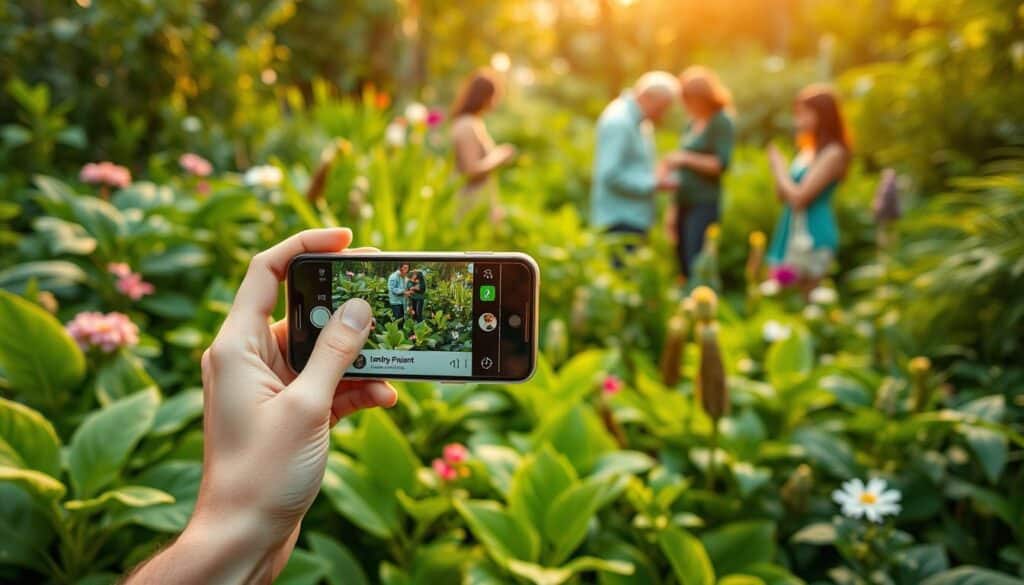
How plant identification apps work
Applications of identification of plants They use advanced technology. They let you take pictures of plants with your cell phone. This picture is then compared to a large data base of species.
These apps are easy and don’t require registration. They work anywhere, making them handy for identifying plants. With continued use, they learn more from user contributions. This makes the identification more precise and varied.
Key Benefits of Using a Plant App
Technology has changed our connection to nature. Applications for plant identification have a number of advantages. They make it easier to learn about the green world around us. Users, whether novice or expert, can easily identify species.
Quick and Accurate Identification
Identifying plants quickly is a great advantage. With a few clicks, these apps help you recognize different species. That’s super useful both in new places and at home. In addition, they are constantly updated to increase the accuracy of identification.
Ease of use
These applications are easy to use. They’re designed so that everyone can move around with ease. Step-by-step guide and extra information about plants make learning even easier.
Seek: a complete tool for adventurers
THE Seek app It’s perfect for nature lovers. Created by the California Academy of Sciences and the National Geographic Society, it helps us learn about plants and animals. The cool thing is, with games and logos, it makes the adventure even more fun.
Characteristics and functions
The app has several cool features. Here’s what you can do:
- Identification of plants accurately, using the smartphone camera;
- Challenges that encourage the discovery of new species;
- User-friendly interface that can be used by children and adults;
- It does not require registration, ensuring the safety of users.
Security and Privacy
Seek takes security very seriously. It doesn’t share personal data, so it’s super safe for kids. Adults can rest assured that it was designed with users’ safety in mind.
PlantNet: Citizen science within your reach
THE PlantNet It’s an innovative initiative that engages citizens in science. It allows people to take photos of plants and share them. It helps grow a big data base. This makes it easier to identify different plants.
This collaboration between plant lovers and scientists creates a very useful resource. It increases our knowledge of the plants that live near us.
How to contribute to the database
It’s easy to help PlantNet. All you have to do is this:
- Download the app PlantNet on his cell phone.
- Photographing plants, paying special attention to flowers and leaves.
- Send the photos through the app for analysis.
- Check how the I. D. ‘s going and cross-reference data.
Identifying Different Species
Everyone’s help makes the PlantNet know many species. The more photos you send, the better our system is at identifying plants.
This collective effort makes learning about plants stronger. It helps to better understand the places where they live. PlantNet is a very good tool for those who love botany.
iNaturalist: Community and Connection
THE iNaturalist connecting people around the world, strengthening science. It has over 400, 000 members. They share information from various species.
This exchange helps us better identify and understand the diversity of life on Earth.
Interaction with scientists and naturalists
Who uses the iNaturalist You can talk directly to scientists and experts. This can happen in various ways, such as:
- Comments and insights on discoveries that enrich common knowledge.
- Debates on the environment and species behavior, never to stop learning.
- The chance to engage in collaborative research, bringing the public and scientists even closer together.
Sharing Findings
The site is perfect for sharing findings. Members post their observations, helping with research and conservation.
No iNaturalist, by sharing, everyone gains a broader view of nature’s richness and the vital role each being plays in the world.
LeafSnap: Global recognition of species
THE LeafSnap It’s great for anyone who likes to identify plants. He’s using state-of-the-art technology to find out what species it is. It has an easy-to-use interface and cool stuff that’s impressive. So it has become a must-have for anyone who loves nature and gardens.
What an impressive database
THE data base of the LeafSnap It is huge. He has information on various plants, like flowers and trees. He can recognize about 90% of the species, which is too. It allows us to know more about the biodiversity around us.
App functionality
Use the LeafSnap It’s easy and it is very precise in finding the species. You just take a picture of the plant. Then, in seconds, the app shows you what it can be by photo. With artificial intelligence, LeafSnap is a great way to learn about botany.
NatureID: Plant care follow-up
THE The natureID is more than a plant identifier. He’s a great ally in caring for them. The app offers a monitoring system to keep plants healthy. It provides important information about what each plant needs.
Plant health monitoring
With the The natureID, You can see how healthy the plants are. This helps users know what’s best for each type. The app monitors things like soil moisture and light. This reduces the risk of problems.
Notifications of specific care
Using the The natureID, you get tips on what your plants need. This makes it easier to follow the care routine. These tips help to keep the plants well, ensuring proper attention for each one.
Flora Incognita: a mapping of the biodiversity
Unknown Flora It’s an important tool for plant identification. She’s headed for Central Europe. Their app has a user-friendly design for anyone who wants to learn more about plants.
Unique resources and functionalities
The app allows you to identify plants quickly. Users can record what they find. They can also make lists of the plants they find, which are easy to follow.
- Information on toxicity and conservation status of species
- Access to an extensive database on local flora
- Interactions that promote engagement with the scientific community
Unknown Flora not only stimulates exploration, but also helps to better understand the natural habitat of species.
Conclusion
This text showed how plant apps are changing our relationship with nature. Applications such as Seek, PlantNet, iNaturalist, LeafSnap and Unknown Flora offer helpful tips on identification and care with the plants. This makes gardening and the study of plants easier.
Now, technology is a great help to live in a more conscious and informed way. There are many applications to choose from. So every plant lover can find the perfect app, whether it’s to discover new species or take care of their plants.
In summary, plant apps are critical for anyone who wants to improve their gardening. They’re easy to use, they bring accurate information and help the community. This makes it easier to exploit and protect the environment. So they are essential for anyone who wants to know more about plants.
FAQ
What are the best applications for plant identification?
Seek, PlantNet, iNaturalist, LeafSnap, NatureID, and Flora Incognita are some of the best in the business. They provide accurate identification, help with plant health and create communities of users.
How do the apps identify plants?
They use image recognition technology. You take a picture of the plant. It’s compared to a large database for quick identification.
Do the applications require registration for use?
No, apps like Seek and LeafSnap don’t need to register. This allows you to get started quickly without complications.
What additional information do these applications provide about plants?
They give tips on necessary care, such as water and light. They also tell you about toxicity and whether the species is protected or not.
Can I contribute data to the apps?
Yes, you did. With PlantNet, for example, you can help science. By photographing plants, you help increase the database and accuracy of identification.
Are there any safety concerns when using these apps?
Apps like Seek are safe and child-friendly. But it’s good to check the permissions and privacy policies of each app.
Do the apps work without an Internet connection?
Some have offline functionality. But to identify plants in more detail, you usually need an Internet connection.
What is iNaturalist and how does it differ from other apps?
INaturalist connects you to a vast network of naturalists and scientists. This helps to share findings and contribute to biodiversity studies as well as species identification.
Content created with the assistance of artificial intelligence