
Adverts
This guide will help you excel at professional video calls. We will teach you simple techniques, from preparation to execution. This way, your remote meetings will be clear, direct, and respected.
Tasks that were once done face-to-face are now done online. Tools like Zoom and Google Meet make things much easier, but they also present challenges.
Adverts
Poor audio and awkward silences are common problems. But you can avoid these issues. Just do a quick check before the call and be well-organized.
In this guide, you will learn about technical preparation and how to organize your space. We'll also talk about how to use your voice and body in video calls. There are tips on... AI and appropriate online behavior.
Furthermore, we explained about consent and online tracking. Remember: platforms need permission to use your information. cookies. If you disagree, some features may not work.

How to video chat: essential principles
Video chatting requires attention to certain details. Before a call, clearly define what you want to say. This includes choosing the right tone and pace for the conversation.
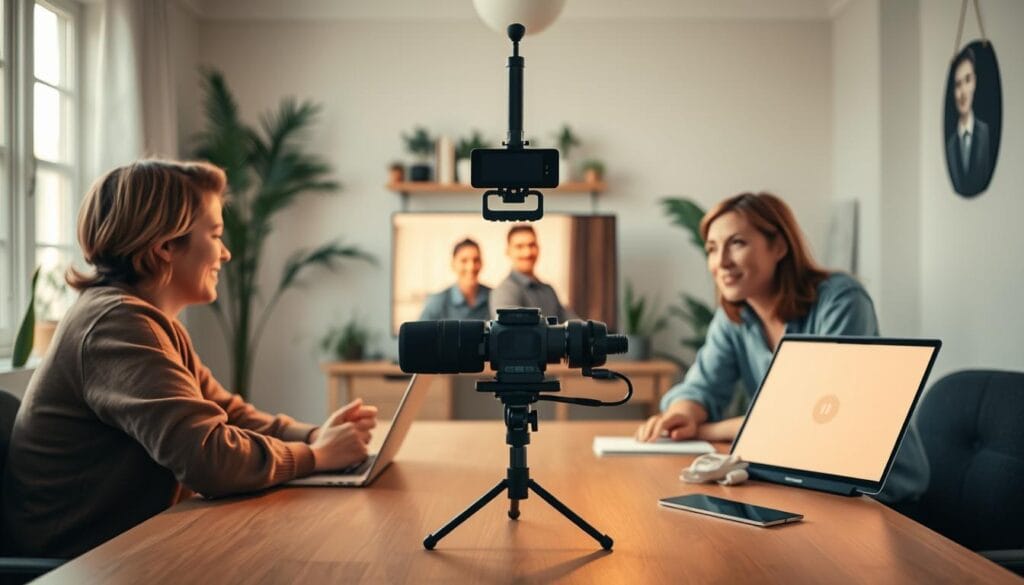
Why video communication requires specific skills
In videos, we don't see everything, and gestures are less noticeable. Therefore, some techniques can help improve communication.
- Technical preparation prevents problems and distractions.
- Choosing the right clothes and positioning yourself on screen contributes to credibility.
- Knowing how to pause and look at the camera makes all the difference.
The impact of clarity, objectivity, and credibility in calls.
Without seeing people's reactions, speaking clearly is essential. This helps to avoid misunderstandings.
Being objective saves time and keeps everyone interested. Being credible depends on how you present yourself and the quality of what you show.

Telegram
Differences between face-to-face conversation and video conversation
The way we perceive each other changes from face-to-face to online interactions. Facial expressions attract more attention.
We tend to speak louder and look at the camera to appear as if we are looking into people's eyes. Communicating online is faster, but it has challenges, such as interruptions.
- Up close: we use more gestures and signs.
- On the internet: we need to adapt our habits and take care of the environment.
- Discussing privacy and permission is important before recording.
Technical preparation for professional video calls.
Do a good job technical preparation It reduces stress. This helps avoid problems during the meeting. Before going in, it's good to follow a checklist. That way, you can test everything and make the meeting go smoothly.
- Audio and video verification: It is important test audio and video on platforms like Zoom, Google Meet, and Microsoft Teams. Check that your microphone, speaker, and camera are working properly.
- Use headphones with a microphone: Using headphones with a microphone reduces echo, making your voice clearer. Position the microphone close to your mouth and adjust the sensitivity to avoid distorting the sound.
- Camera positioning: The camera should be at eye level. An external webcam can improve the image in dark places.
Choosing the right accessories is essential. For important calls, opt for USB microphones or noise-canceling headsets.
- Check your internet speed and use a cable if possible.
- Close programs that use your internet. Have a backup plan, such as your cell phone or another network.
- Keep backup audio and video files on hand in case you encounter any problems.
AI features help improve your video calls without any hassle. These tools cancel noise and make your voice clearer. They also adjust brightness and sharpness, improving the image.
It's important to pay attention to consent requirements. Some apps need permission to use your device's camera and microphone. Not granting these permissions can limit the app's use, so it's good to plan ahead.
In short, be technically prepared. Test your audio and video and choose a good microphone. Use AI features and check your connection to ensure trouble-free meetings.
Organization of the environment and personal image.
A tidy workspace helps you concentrate better and looks more professional. Before starting a video call, check for nearby noises. Remove distracting objects from your view and make sure nothing sensitive is playing in the background.
This simple preparation shows care and respect for the person you are going to speak to.
Lighting: natural versus artificial and ideal positioning.
Facing a window makes good use of natural light. It prevents you from being in the dark and makes your skin look better. If natural light isn't available, choose artificial lights that diffuse light well, such as softboxes or LED rings.
Light coming from behind isn't good because it casts shadows. Test how you'll appear in the light before the meeting.
Neutral background, virtual backgrounds, and blur to maintain professionalism.
It's best to choose a simple and professional background. A plain wall, a tidy bookshelf, or some plants are good choices. This makes people pay more attention to what you're saying.
If you can't adjust the setting where you are, you can use a virtual background or a blur effect. Adjust the settings in Zoom, Microsoft Teams, or Google Meet to get it right.
Clothing, posture, and camera framing
Dress as if you were actually going to a business meeting. It's best to wear clothes in neutral colors and without strong prints. And maintain good posture to project confidence.
Position the camera at eye level. This makes it easier to make eye contact. Your face should fill one-third of the image, leaving some space above your head. Look directly into the lens, so it looks like you're looking into the person's eyes.
- Check facial expressions; avoid sudden mood swings.
- Protect your privacy: do not expose documents or screens containing sensitive information.
- Test Personal image in video call before important meetings.
Preparing the content and structure of the conversation.
Organizing the content before the video call greatly improves efficiency. Define the purpose, how long it will last, and what you hope to achieve. This helps organize the topics and keeps the conversation focused.
It's important to explain everyone's role and what is expected of their contribution. Make lists with the topics in order, to make the presentation structure clear to everyone.
- Quick introduction with objective and agenda.
- Key points with estimated time per topic.
- Closing remarks with next steps and responsible parties.
Prepare a script for online interviews, organizing personal topics. Practice, but don't memorize. This helps you speak with more confidence.
Use simple slides with clear images and minimal text. Test screen sharing beforehand and have a backup plan for files.
Have short scripts to speak fluently. Use index cards with key points as a guide. This way, you maintain eye contact.
Artificial intelligence tools are useful for summarizing and recording decisions. They help to track tasks after the meeting.
Review the meeting points thoroughly and make adjustments as needed. Practice helps avoid surprises and makes video calls more productive for everyone.
Speech, voice, and body language techniques on screen.
To communicate effectively via video, it's important to pay attention to your voice, facial expressions, and gestures. These online techniques help you project clarity and confidence, even remotely. Here are some simple practices to make your presentations more engaging and professional.
- Keep your voice volume moderate. This prevents you from speaking loudly and allows you to adjust the microphone for good voice capture.
- Use pauses between ideas. They help the audience understand what you're saying better.
- Change the pace by speaking more slowly to explain, and faster to persuade.
Diction and clarity
- Articulate your words clearly and avoid rushing through sentences. Record and review short excerpts to improve.
- Read texts aloud and practice correct pronunciation of consonants to improve your diction in video calls.
- When addressing a diverse audience, use simple and direct language.
Facial expressiveness and eye contact
- Looking directly at the camera creates a direct connection. Position the camera at eye level.
- Pay attention to facial expressions. Smiles and subtle eyebrow movements show empathy.
- Change your facial expressions to indicate a change of subject, while maintaining a natural tone.
Virtual body language
- Maintain an open posture and use small gestures that fit on the screen. Gestures that are too large may go out of view.
- By synchronizing your hands and speech, you reinforce what's important without causing distractions.
- Avoid repeating the same movement too often. This can distract attention and affect your credibility.
Avoid verbal tics and maintain authenticity.
- Use recordings to identify repeated words like "like," "right?" and "uhhh.".
- Replace those repetitions with pauses. This gives more force to your speech.
- Speak naturally, without rehearsing. This way, you sound more authentic and can adjust your tone to suit the situation.
Artificial intelligence (AI) tools help improve speech rhythm, identify repetitions, and suggest practical adjustments. Adopting these strategies enhances how you speak in video calls and increases your online presence.
AI tools and resources to improve video calls.
AI makes video calls more productive and easier for everyone. It uses things like machine learning and computer vision to automate tasks and easily improve audio and video quality.
Automatic transcription and smart minutes generation.
In automatic transcription, The voice instantly becomes text, summarizing important points. In a meeting, this helps maintain control over the decisions made.
With smart minutes, it's easy to find what was said in recordings. This makes follow-up faster and keeps everything more organized.
Noise cancellation and audio enhancement
O Noise cancellation It removes unwanted sounds like typing or barking. This makes the voice clearer, which is great for those who work from home.
Furthermore, some platforms automatically improve the audio. They make everything easier to understand without needing to change anything.
Video optimization and visual experiences
If the lighting is poor, automatic adjustments help. Background blur and virtual backgrounds maintain a professional look, even from home.
These changes make the meeting less visually distracting. Everyone can look professional, no matter where they are.
Real-time captions, translation, and virtual assistants.
Live captions and translation make collaboration across different languages easy. Having multiple languages in chat transcripts and translations helps teams around the world.
Virtual assistants can schedule appointments, note important points, create tasks, and send reminders. This avoids confusion without the need for other complicated tools.
Security, privacy, and governance
New solutions use technology to prevent intrusions and protect data. But the use of AI for sensitive data needs to follow privacy rules.
Choosing suppliers carefully and controlling who accesses what helps keep everything safe and within the law.
- Benefit 1: saving time with automatic transcription.
- Benefit 2: clearer communication thanks to Noise cancellation.
- Benefit 3: global inclusion through real-time captions.
Best practices for digital etiquette in video calls.
A successful video call requires respect, clear understanding, and organization. Following video call etiquette helps the meeting run smoothly. This also makes the experience better for everyone.
Punctuality and identification
Being online on time demonstrates professionalism. Log in early and introduce yourself quickly upon arrival. On platforms like WhatsApp Business or Zoom, it's important to keep your photo and name updated. This helps others identify you.
Using chat and signaling to communicate
Define the chat rules at the beginning to avoid repetition. The chat should be used to send links, ask quick questions, or make short comments. If you want to speak, it's best to use the virtual raised hand gesture. Alternatively, reactions or a quick message in the chat are better than interrupting someone.
Interruption management
- Turn off your microphone when you are not speaking.
- Use visual cues or speaking areas that the moderator controls.
- Set aside specific times for questions, following the planned schedule.
Privacy and recording
Before you begin, inform them about the recording and ask for permission clearly. Explain how the recordings and transcripts will be used, and who will have access to these files.
Cookies, device access, and permissions.
Explain what permissions the platform requires and what you accept or decline. Declining permissions may limit functionality. Therefore, show how the permissions affect the meeting.
Schedules and respect for time
Avoid making unnecessary calls outside of work hours. If you need to reschedule an appointment, communicate clearly and suggest another day. Respecting other people's time demonstrates professionalism.
Voice and text messages
In WhatsApp audio messages, keep them under one minute. Prefer direct text messages with short paragraphs and no grammatical errors before sending. This helps prevent confusion and rework.
- Define the rules of etiquette for video calls before the meeting.
- Create rules for using the chat, such as for asking questions and sending links.
- Always ask for permission before recording.
- Follow the rules of online punctuality and identify yourself correctly.
Solving common problems and providing quick solutions.
When technical problems arise in video calls, being prepared helps a lot. Having a plan can reduce stress, allowing the meeting to remain productive. Quickly identify the issues and implement solutions.
For audio problems, ask everyone to be quiet. Turn on the Noise cancellation. Switching to headphones or going to a quiet place can help.
If your internet connection fails, try using an Ethernet cable. Alternatively, lower the video quality. Turning off the camera can also help improve the sound. Always have a backup plan, such as a contact phone number or an alternative link.
Knowing the platform well saves time. Learn how to mute your microphone or share your screen. Keep your slides ready and a backup for safety, in case something goes wrong.
- Use live transcription if the audio is poor.
- Send the slides via chat or email if the screen freezes.
- Selectively share your window to maintain privacy.
If the meeting goes off-topic, pause and quickly recap. Asking someone with a good internet connection to summarize can help. That way, everyone gets back on the same page.
Record meetings with everyone's permission. Enable automatic transcription. Store everything in secure locations. This helps with later review and keeps everything organized.
- Write down important decisions in a document.
- Send a summary by email after the meeting, with tasks and deadlines.
- Check the platform's privacy policy before storing personal data.
Having simple routines and using familiar tools helps a lot. Clear procedures for solving problems ensure that unforeseen events are only brief pauses, not long interruptions.
Conclusion
This guide summarizes best practices for master video calls. Technical and content preparations are essential before the meeting. Adjust the lighting, framing, and choose the best equipment. Connection tests and a clear script help avoid problems.
Cultivating a convincing voice and proper body posture are fundamental. AI tools, such as transcription and noise cancellation, enhance the experience. Experts, like Cida Stier, highlight the importance of preparation and clarity when communicating.
It's important to understand the legal responsibilities related to recordings and data. Inform participants about the use of cookies and obtain their consent. Practice vocal techniques and test AI tools to improve your video communication skills.
FAQ
What does this guide teach you about video calls?
This guide teaches you how to become an expert in video calls. Learn about it. technical preparation, This guide covers how to improve your image and organize your content. It also includes tips on voice, posture, AI usage, and online etiquette. The focus is on helping you communicate better remotely.
Why does video communication require different skills than face-to-face communication?
In a video call, we see less and hear differently. Therefore, preparing and understanding the technique is essential. Learn to look at the camera and adjust your way of speaking. This way, you replace the lack of direct contact with clarity and charisma.
How do clarity and objectivity impact a video call?
Speaking clearly and directly makes all the difference. This avoids confusion and makes meetings more effective. Managing your image and technology well helps to convey more confidence.
What are the main differences between in-person and video meetings?
The feeling of being together changes; we look different on screen. It's common to speak louder. You should look at the camera and stay alert for technical problems. Also, it's good to know the rules of how to behave online.
How should I check my audio and video before a meeting?
Before anything else, test everything: microphone, speaker, and camera. Use the platform's options and make a test call. Adjust the microphone and camera properly, and check the lighting to avoid surprises.
What equipment is most suitable for professionals?
Use USB microphones or noise-canceling headsets, and webcams that are good for low light. Remember: headphones with microphones reduce echo. And for a top-notch image, consider an external webcam and good lighting.
How can I test my connection and have a plan B?
Check your internet speed, prefer wired to Wi-Fi, and close programs that use a lot of data. And always have a plan B. This could be using your cell phone or a phone number so you don't miss the meeting if the internet goes down.
What AI features can improve meeting quality?
AI is a great help. It can remove noise, improve your voice and image, and even create virtual backgrounds. Intelligent platforms also make it easier to organize the meeting and follow up afterward.
Does the use of AI tools or advanced features require permissions?
Yes. Some functions require access to data on your device or the use of cookies. Inform everyone in the meeting and ask for permission beforehand. If someone doesn't want this, some functions like transcription may not work.
How to choose and organize the environment for the call?
Choose a quiet and simple place. Remove personal or sensitive items from the frame. If you can't rearrange it, use a virtual background or a blur effect to hide what's behind you.
What is the best positioning and type of lighting?
Prefer natural light and face the window. If you need artificial light, choose a soft light from the front. Good lighting makes you and everything around you look better on camera.
How should I dress and frame the camera?
Dress professionally, as if you were meeting people in person. Stand up straight. The camera should be at eye level. This way, you appear to be looking directly at the person on the other side.
How do I prepare the agenda and organize the content of a meeting?
Define the objectives and organize the topics beforehand. Share the plans with those who will participate. If you are going to present something, prepare an introduction, the essentials, and conclude by outlining the next steps.
How to create effective slides and visual materials?
Create clear slides, using minimal text and easy-to-read images. Test screen sharing beforehand. Also, have everything saved elsewhere, such as in the cloud. Don't clutter your slides with unnecessary information. Focus on showing only what truly matters.
What are concise scripts and how do you use them?
Concise outlines are quick guides to what you absolutely must mention. Use them to stay on track. They help your speech flow, cover everything you need to, and make transitioning between topics easier.
What vocal techniques should I practice for video calls?
Practice speaking with the right tone, clarity, without rushing, and with pauses. There's no need to shout. Recording yourself helps you better understand your way of speaking and adjust as needed.
How to use facial expressions and eye contact effectively?
Looking at the camera is like making eye contact. Control your expressions and avoid showing too much emotion suddenly. Remember that the camera emphasizes expressions a lot. So, be natural and consistent.
How to avoid verbal tics during a presentation?
Identify your speech habits by recording yourself or using transcripts. Practice saying things differently. Using automatic transcripts or professional help can reduce these repetitions.
What AI functions help in post-meeting activities?
After the meeting, AI can transcribe everything and create intelligent summaries. There are tools to find specific phrases. Automated assistants can organize tasks and send reminders, making it easier to follow up.
How do real-time captions and translation work in calls?
Intelligent platforms transform speech into text and translate it instantly. This helps in working with people who speak various languages. Subtitles are great for those who have difficulty hearing and make everything more accessible.
What are the basic rules of digital etiquette?
Arrive on time, introduce yourself upon entering, and dress appropriately. When you're not speaking, turn off your microphone. Use the chat to share links and questions. And remember to signal when you want to speak.
How to manage interruptions and chat usage?
Define ways to signal when you want to speak. Use the chat for details and links. The moderator should control the time for questions and manage who speaks to avoid chaos.
What information should I provide regarding recording and privacy?
Warn users about recordings upfront and ask for permission. Explain how the information will be stored and used. Be careful about permissions and data accessed by technologies, as this affects what you can do.
How to deal with poor audio or background noise?
Ask them to turn off their microphones when they're not speaking. Activate noise cancellation if the program has it. Choose a quiet place or use headphones that help with this. If the noise doesn't stop, ask for a break to resolve the issue.
What if the connection is unstable?
If the connection is bad, try a direct connection, reduce the video quality, or turn off the camera. Use a backup, such as your phone, if needed. Ask for a summary if you miss something. You can restart the call if necessary.
What shortcuts and resources can help you recover a presentation?
Learn the commands for audio, video, sharing, and chat. Use the feature to share in a single window for added security. If you have any problems, send the materials via chat or email.
When should I resort to backups such as recordings and transcripts?
Record important decisions when they are made. Use transcripts to avoid forgetting responsibilities. Send written summaries afterward, confirming what was decided.
How can I ensure the security of backups and meeting data?
Keep everything secure and control who accesses it. Check the platform's usage policies and required permissions before enabling data-dependent features.
What results can I expect by applying these practices?
Your meetings will improve, with fewer errors and greater clarity. The use of technology and personal preparation ensure efficient and reliable remote communication.
What immediate action can be taken to improve my video calls?
Practice in advance, use smart technologies, and train your expression. Small changes can make a big difference. This way, you can improve your performance quickly.
Content created with Artificial Intelligence Assistance